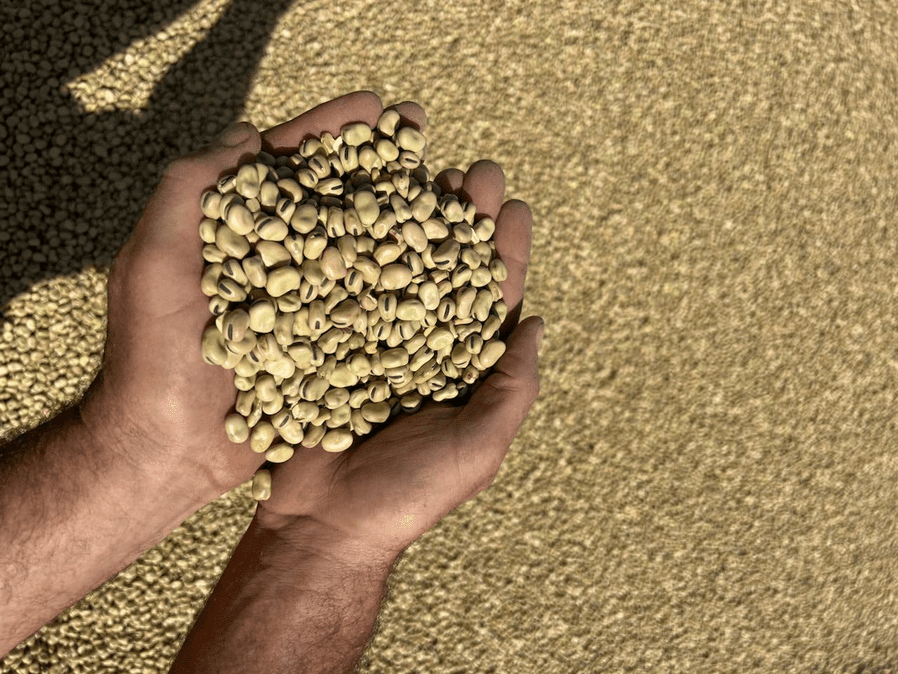
Faba beans at Wagin in Western Australia. File photo: Demeter Grains
Pulse Update: Measured grower sales counter weighty AUD
PRESSURE from the stronger Australian dollar is being countered by restrained grower selling of chickpeas and lentils, which has allowed prices to drift higher.
The grower strategy has allowed shorts in the market to develop, creating spikes that have generated a run of sales from on-farm storages.
Surprising the market has been the volume of exports in both pulses in December that show solid new-crop sales to India in particular, despite tariffs being in place.
Chickpea
Chickpeas delivered Brisbane are trading this week at $630/t, with at least four cargoes due to load at Queensland ports before the month is out.
The market is up around $5/t on mid-January levels, and traders appear to be working together to split the hatches and get cargoes of up to 35,000t filled.
Latest Australian Bureau of Statistics data shows December chickpea exports of 588,122t, well down on the 719,042t shipped in December 2024 as part of the record program of 2024-25, but above expectations.
“We’ve clearly seen a lift in values here, but the dollar is muting some of the benefit,” the international market is probably off its lows by US$50-80/t,” independent trader Peter Wilson said.
“This dollar is really hurting; it makes it harder for Aussie dollar prices to continue to rally.”
Sources say growers have found success by selling just enough chickpeas to cover shorts in the market, most of which appear when a vessel is nearing or on the berth in Qld.
“Australian farmers have got really good-quality storage, and when you’ve got quality product too, that creates options……so supply hasn’t been chasing demand.”
Ahead of chickpeas, canola was the major winter crop sold for cash at harvest by central and northern NSW slopes growers.
Many chickpea growers in NSW and Qld also run cattle, and the buoyant beef market has taken the pressure off mixed farmers to sell chickpeas and cereals at depressed rates.
“Across chickpeas and lentils, a lot of producers have sheep and/or cattle too, and people are turning off livestock at margin.”
Some concerns are developing that India’s rabi crop may not meet its full yield potential, and some Indian demand is evident.
The month of Ramadan starts next week, and this is expected to subdue buying interest from Bangladesh; however, Pakistan is still in the market.
Widespread rain is forecast for Qld and northern NSW chickpea-growing areas, and this will brighten the outlook for new-crop area, ideally planted in May and June.
Faba beans
Faba beans are trading at around $425/t for No. 2 grade delivered southern ports, down a few dollars from last month, and for April-June shipment.
In his report out this week, GrainSource trader Simon Hutt said nearby export demand for faba beans has dropped following the completion of prompt programs to Egypt, Australia’s only bulk customer.

Pulses including faba beans, pictured here with Australian Export Grains Innovation Centre market lead Mary Raynes, have found a place in many Australian cropping rotations in recent decades. Photo: Mary Raynes
“The timing of these bids is important; Egypt’s domestic faba bean harvest begins in April, meaning Australian shipments executed now are likely to arrive as competing domestic Egyptian fabas are coming on to the market,” Mr Hutt said.
“That overlap reduces importer urgency and also limits willingness to commit to volume.”
On the domestic market, faba beans may pick up some volume from farmers or millers unwilling to pay high prices for the reduced corn crop out of northern Vic and southern NSW which will hit the market next month.
Lentils
ABS data shows Australia exported 410,805t of lentils in December, well above the 250,655t shipped in 2024.
Lachstock Consulting’s latest vessel line-up shows another two cargoes of around 35,000t are due to load this month in South Australia which, along with Vic, ship lentils in bulk.
Bulk lentils delivered port are trading at around $660/t, up $20/t on the month.
“Lentils are benefitting from local demand from exporters, and some short positions; it seems to be a regular cycle,” ETG Horsham-based head of Australian pulse trading Todd Krahe said.
“Growers are picking out the spikes, and selling when they see a few bills coming in, or when they want to…clean out silos.”
That means growers in South Australia, and in Vic’s Wimmera and Mallee, are readying vertical storage for graded grain, or for fertiliser, ahead of planting which is expected to start in April.
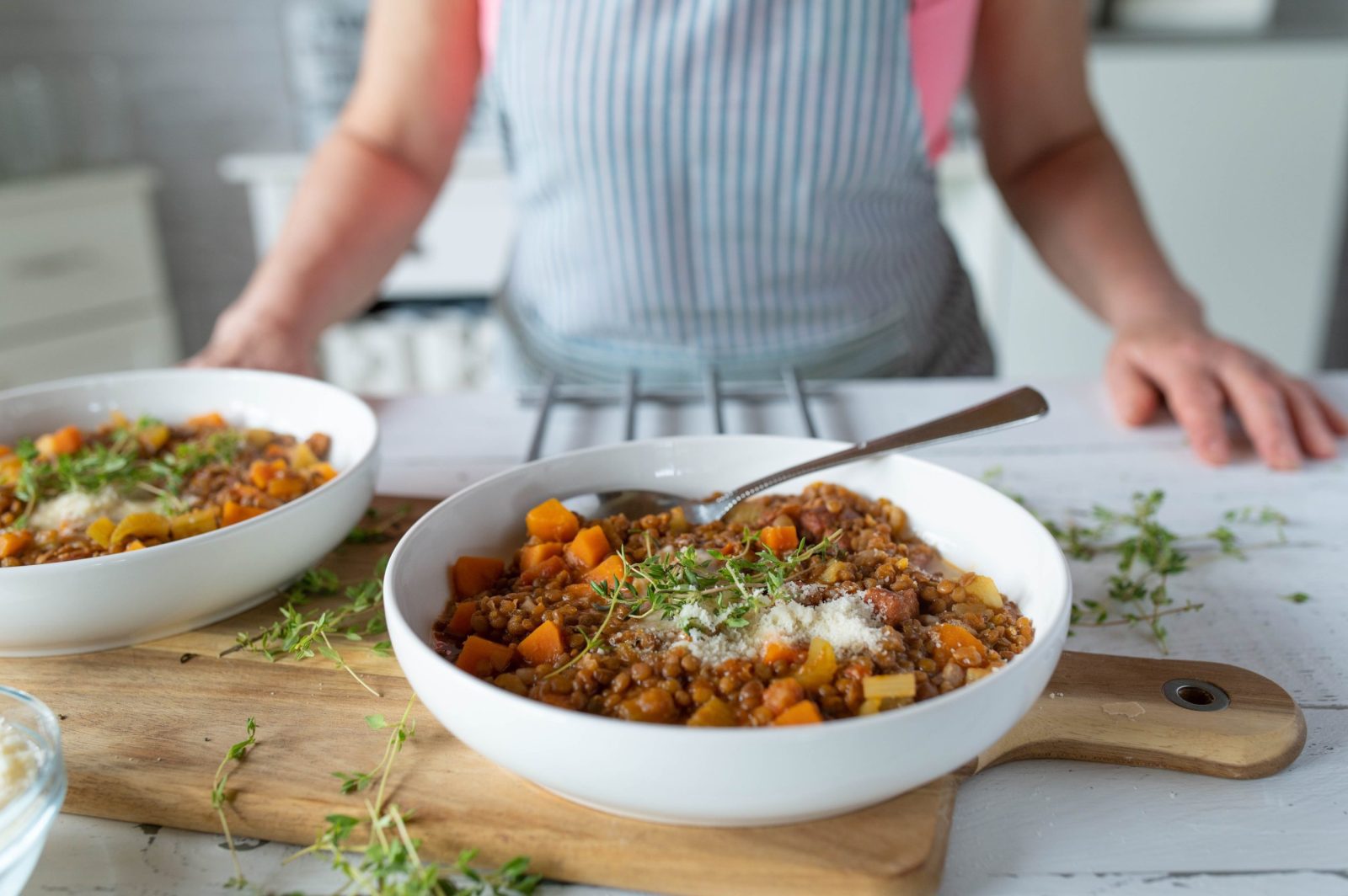
World Pulses Day 2026 fell on February 10, and promotes pulses as part of a healthy diet. Australian pulses are popular in the domestic diet, and are sold to countries around the world. Photo: Global Pulse Confederation
Mr Krahe said volumes of lentils being priced by growers remained modest.
“They’re still selling the minimum.”
Canadian growers are thought to be in a similar position, buoyed by improved Canada-China relations that have the People’s Republic back in the market for Canadian canola and yellow peas.
In US-dollar terms, Canadian and Australian lentils are sitting at roughly evens going into South Asia.
Egypt has been buying some lentil-faba bean combination cargoes, and Sri Lanka and Pakistan have also been in the market.
Sri Lankan buyers appear to have responded to the smaller overall size of Nipper-type lentils this harvest, the reflection of a late start and/or tough season in some areas.
It means Jumbo types are trading at $680/t delivered Wimmera packer, around $60/t above the market for the smaller Nipper types.
Liz Wells February 11, 2026
Click here to read the full article.